



- Wynn Home Design UX Design
- User Account Dashboard UX Design
- User Account Activity UX Design
- Notifications Experience UX Design
- Fios Navigation Frontend Development
- Save Brass Web Development
- Fios Design System Frontend Development
- Life on Fios Frontend Development
- Outfit Barn Web Development
- Dog & Meow Web Development
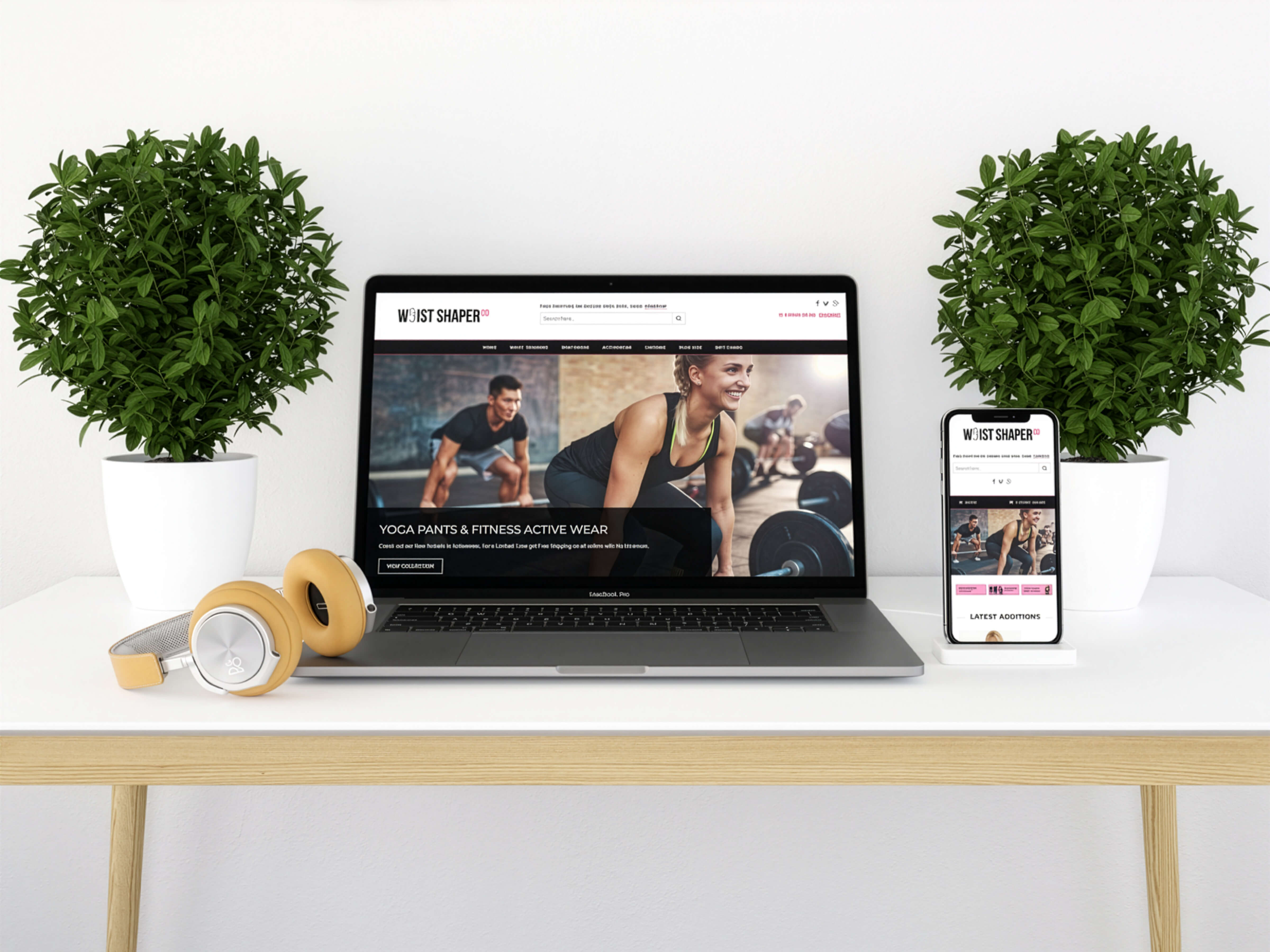
- Waist Shaper Co Web Design
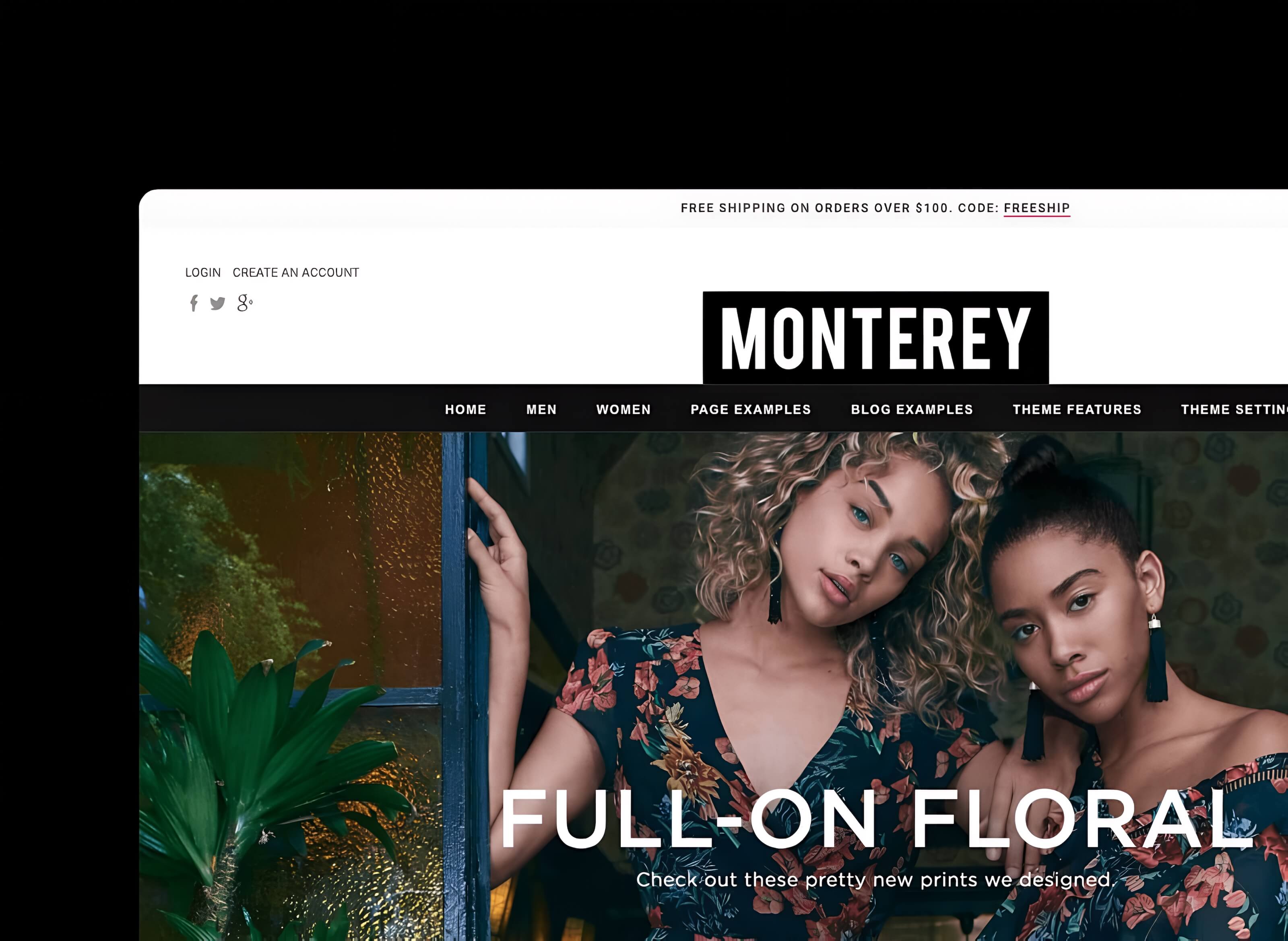
- Monterey Web Development
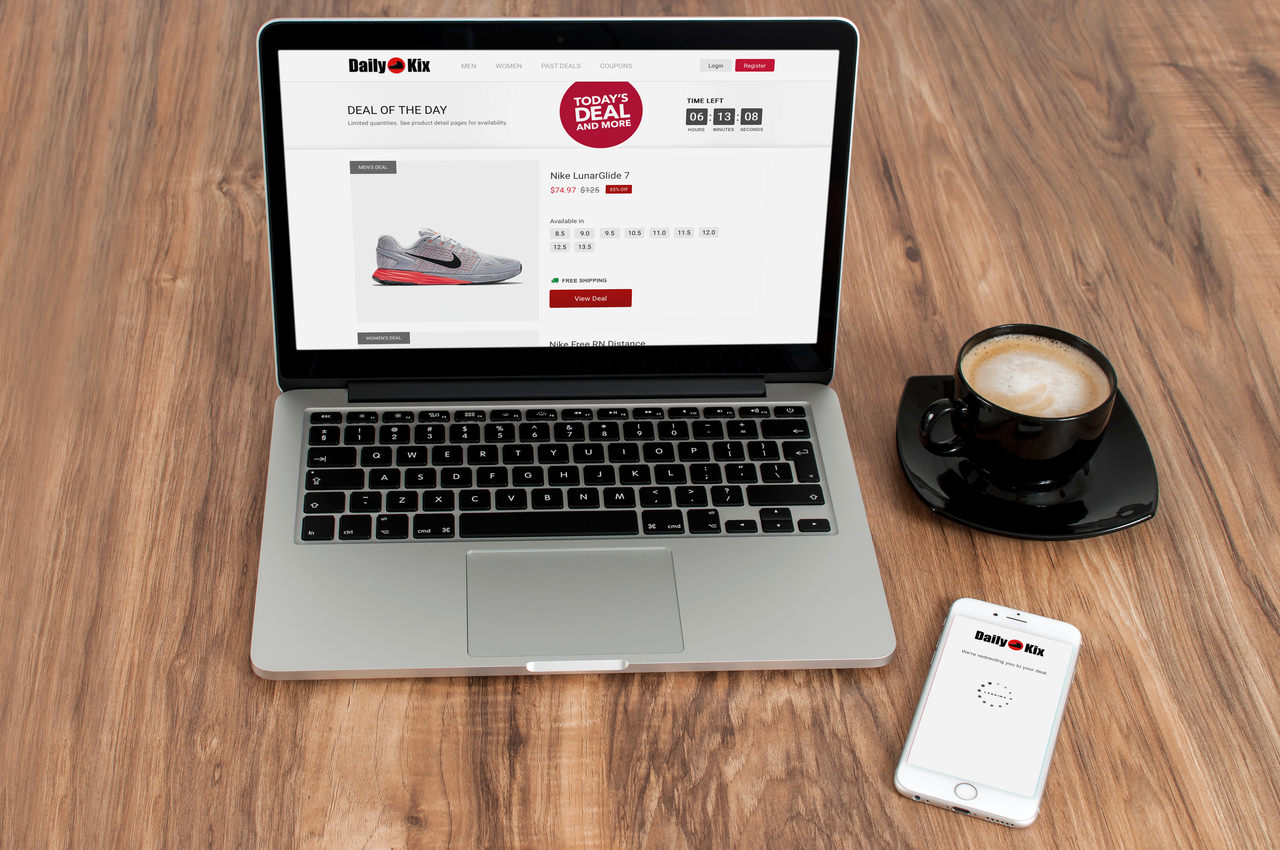
- Daily Kix Web Development
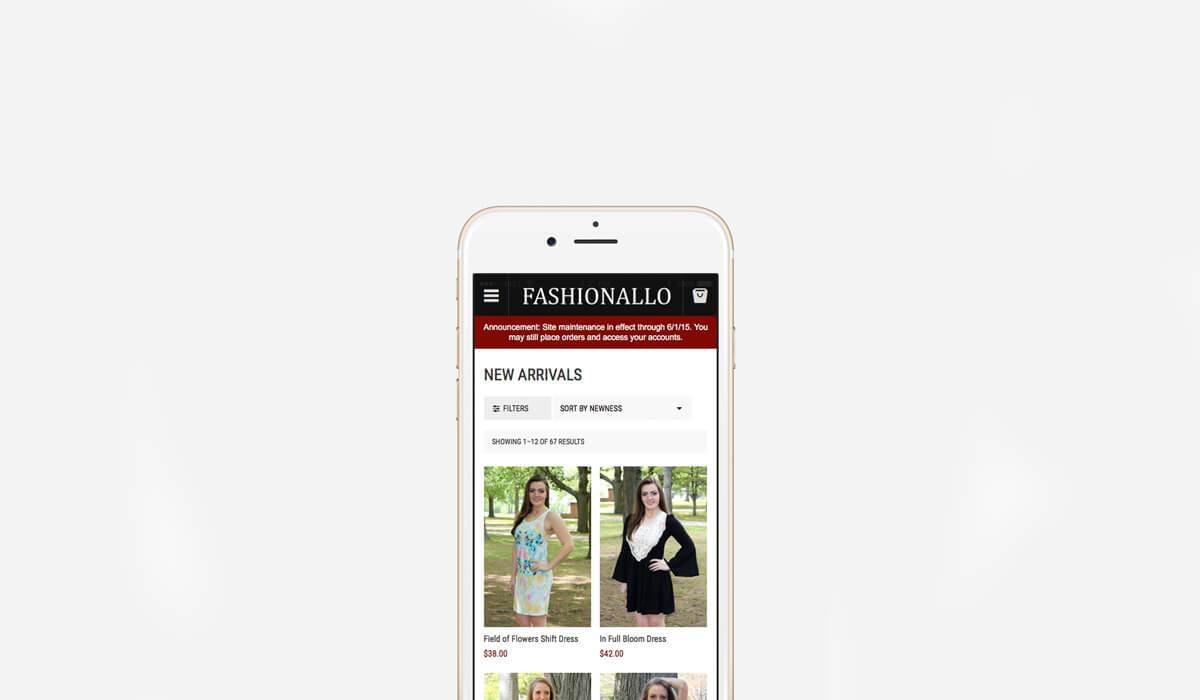
- Fashionallo Web Development
- Athena Web Development
- Searchona Web Development
- InkHotels Web Design
Design and Development
Monterey
01 Background
Shopify made it possible for anyone to start an online store without needing a developer. But the ecosystem it built around themes created a different barrier. The themes that looked and functioned well cost a significant amount of money, often $150 to $350 or more for a single license. For an entrepreneur just getting started, that is a real expenditure before they have made a single sale.
The free themes available in the Shopify Theme Store filled the gap in price but not in capability. They were limited in customization options, often lacking the flexibility to adapt to different types of businesses, and frequently missing the features that professional stores used to improve conversion and customer experience. An entrepreneur using a free theme was working with a visible ceiling.
Monterey was built to remove that ceiling. The goal was a theme that felt genuinely premium, had the feature set of a paid theme, and could be handed to any entrepreneur for free to help them get their store off the ground without compromise.
Company
Journey Themes
Timeline
6 months (2017–2017)
Role
Full Stack Developer
Platforms
Desktop Web, Mobile Web
Stack
HTML, Javascript, JQuery, CSS, SmartyTPL, Liquid (Custom Shopify Theme Development)
Tools
VS Code, Sketchapp, Invision, Github
02 Problem
Free came with a ceiling. Paid features stayed behind a paywall.
The issue with free Shopify themes was not just visual. It was functional. The features that make an online store perform well: variant display options, quick view, conversion-oriented sections like recently viewed products and promotional popups, and flexible collection layouts. These were almost exclusively found in paid themes. Free themes offered a starting point, not a complete tool.
For entrepreneurs building a brand, that gap showed. A store built on a free theme looked and behaved differently from one built on a premium theme, and customers noticed even if they could not articulate why. The experience felt less considered, less trustworthy, less ready to take their money. That perception had a direct impact on conversion rates and on whether a new business looked credible enough to earn a customer’s confidence.
03 Solution
Fully featured, fully flexible, completely free.
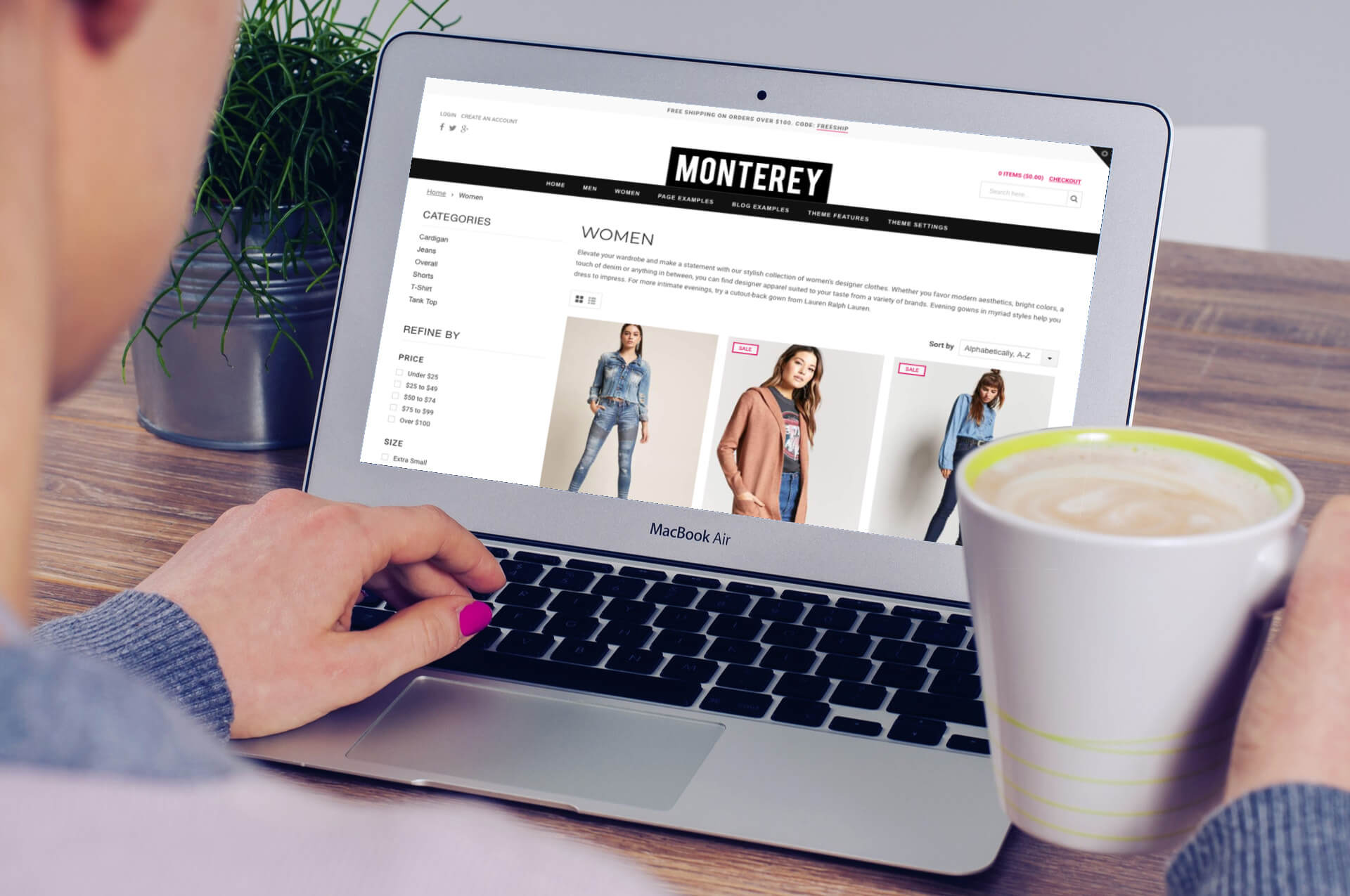
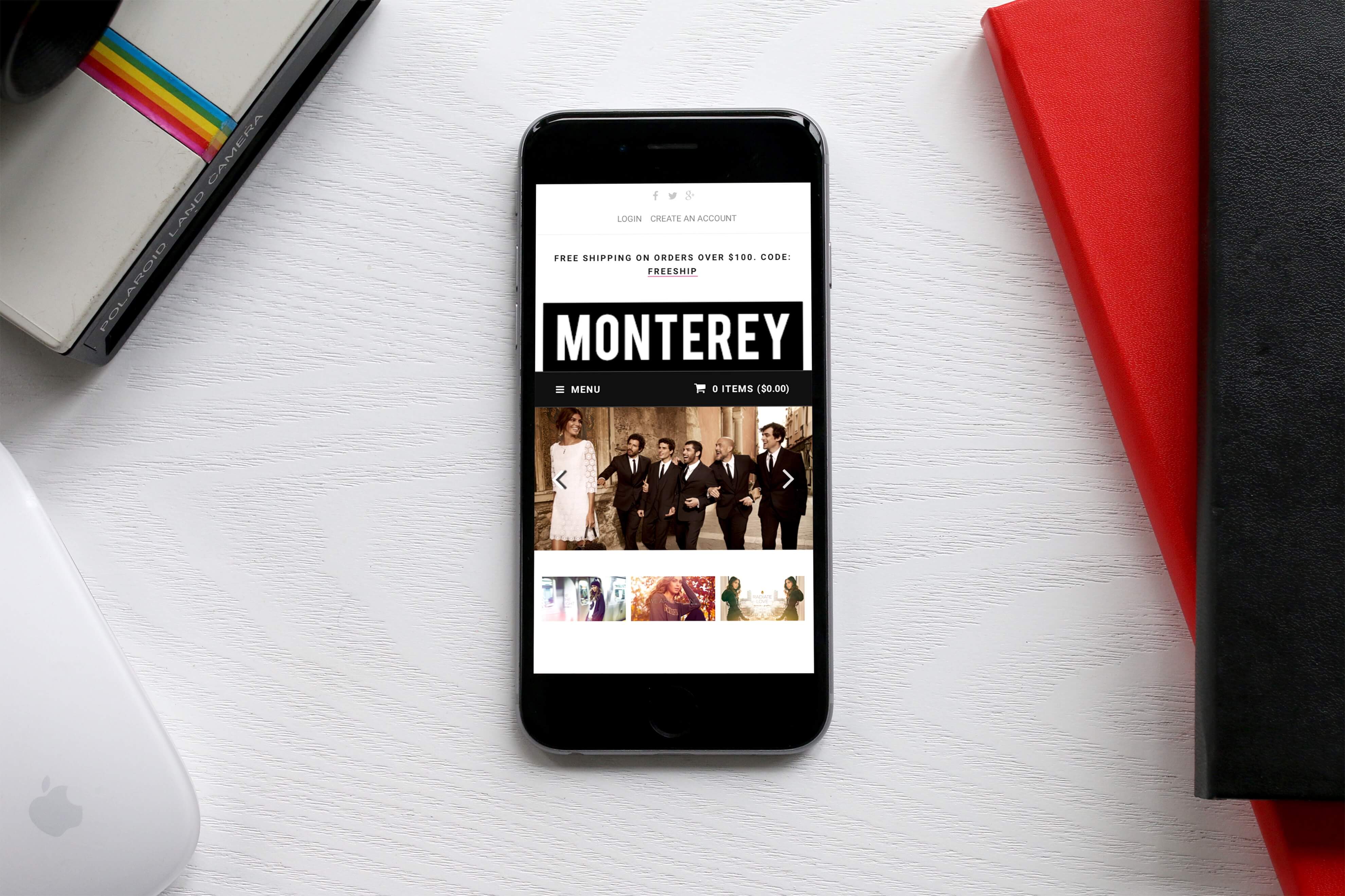
Monterey was designed and built from scratch as a complete, production-ready Shopify theme with a feature set that matched or exceeded what paid themes in the $200 to $300 range were offering. Every design and development decision was made with two goals in mind: make the theme feel premium at first glance, and make it flexible enough to serve a wide range of business types without requiring a developer to customize it.
The customization options were a core part of the brief. A theme that looks great but cannot be adapted to a specific business is only useful to the small slice of merchants whose needs it happens to fit. Monterey was built to be malleable by design, with enough configuration options that a merchant could meaningfully differentiate their store without touching a single line of code.
Navigation
3 header navigation options
Merchants can choose the navigation layout that suits their store structure and brand, from minimal to full mega menu.
Branding
Customizable color scheme
Full color scheme control so every store built on Monterey can look distinctly its own rather than recognizably template-based.
Homepage
2 hero slider options
Two distinct hero configurations for different visual approaches, from full-bleed imagery to split-content layouts.
Products
Hover and zoom on product images
Interaction details that signal quality and give customers a better look at products before committing to a click-through.
Homepage
Modular section layout
Merchants pick and choose which homepage sections to show, making it easy to build a homepage that fits the business without removing or hiding unwanted content manually.
Conversion
Promotional popup for email capture
A configurable popup to capture email addresses for mailing lists, giving merchants a conversion tool on their homepage from day one.
Products
Variant display options
Image swatches, color swatches, and button variant options so product pages can display options in the format that best suits the product type.
Conversion
Recently viewed section
Surfaces products customers have already shown interest in, giving them a low-friction path back to items they considered and improving overall conversion rate.
Collections
Filters, sorting, grid and list view
Full collection page controls including filters, sort options, and the ability to toggle between grid and list views for different browsing preferences.
Collections
3 and 4 column grids with sidebar
Multiple collection layout options with and without a filter sidebar, so merchants can choose the layout that fits their catalog size and browsing behavior.
Products
Quick view popup
Lets customers preview product details without navigating away from the collection page, reducing friction in the browse-to-purchase flow.
Philosophy
Built for the merchant, not the developer
Every feature was designed to be configurable through Shopify's theme editor without code. The merchant is in control from day one.
04 My role
Built for Journey Themes. Released for everyone.
Monterey was built for Journey Themes as a free offering for the Shopify merchant community. I designed the theme, wrote the Liquid templates, built the JavaScript functionality, and handled all the CSS. The entire feature set was conceived, scoped, and shipped by me, with every decision driven by what would actually be useful to the entrepreneurs who would use it.
The most meaningful constraint was clear from the start: every feature had to be configurable by a non-technical merchant through Shopify’s native theme editor. That ruled out solutions that required code edits and kept the focus on building things that worked cleanly within the platform’s customization architecture. The goal was for an entrepreneur to be able to set up their store on Monterey without needing to hire anyone.
Releasing it for free was the point from the beginning. Journey Themes wanted to give entrepreneurs access to something genuinely useful without a price barrier. The idea was also to make it self-sustainable: a theme that was well-built, thoroughly documented, and easy enough to use that merchants could get up and running on their own without needing support. A paid theme comes with a support expectation. A free theme that just works does not. That was the goal: something generous that did not cost us every time someone used it.